When a valve fails, the fastest way to replace it is to read what is already written on it. Most industrial valves carry markings on the body and an identification plate fixed under the handwheel or on the bonnet. In many valves these follow MSS SP-25, the standard marking system for valves, fittings and flanges.
1. Size
Size is the nominal pipe size the valve fits, written in inches (NPS) or millimetres (DN). For example, 4" or DN100. It is not the bore or the outside diameter of the body.
2. Pressure class or PN rating
The pressure rating appears as Class 150, 300, 600 and so on for ASME valves, or PN16, PN40 for EN valves. The class is not a pressure in psi. It refers to a pressure-temperature table: a Class 300 carbon steel valve allows less pressure at 400 °C than at ambient temperature.
3. Body material
The body material is often cast into the body itself. Common markings include:
- WCB: cast carbon steel (ASTM A216), for oil, gas, water and steam
- A105: forged carbon steel, usually small-bore valves
- CF8 / CF8M: cast stainless steel, equivalent to 304 and 316
- LCB / LCC: carbon steel for low-temperature service
4. Trim
Trim is the material of the internal wetted parts that seal: stem, seats and disc or wedge. You may see 13Cr, SS316 or an API trim number such as Trim 8 (13Cr with hard-faced seats). Matching the trim matters as much as matching the body.
5. Design standard
The plate often states the standard the valve was built to, such as API 600 (cast steel gate valves), API 602 (compact forged valves), BS 1873 (globe valves) or ASME B16.34. This fixes face-to-face dimensions, so a valve to the same standard fits the same gap in your line.
Other markings worth noting
- Flow arrow: on check and globe valves, the valve must be installed in this direction.
- End connection: RF (raised face), RTJ (ring-type joint), BW (butt-weld), SW (socket-weld) or NPT.
- Heat number: traces the casting to its material certificate.
- Manufacturer and serial number: useful when ordering spares for the same model.
Example
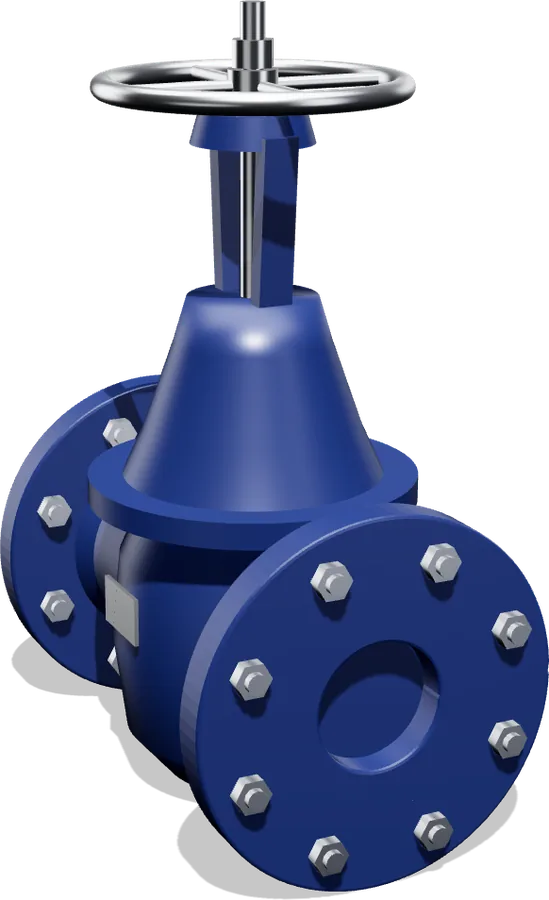
A plate reading 4" · CL 300 · WCB · TRIM 8 · API 600 · RF describes a 4-inch, Class 300, cast carbon steel gate valve with 13Cr trim and hard-faced seats, built to API 600 with raised-face flanged ends.
How to send it to us
Take a clear photo of the nameplate and a second photo of the whole valve showing the end connections. Send both on WhatsApp with the quantity you need. If the plate is missing or unreadable, measure the flange outside diameter, the bolt count and the face-to-face length, and we will identify it from those.